Military Activity in Saint Petersburg, Russia
An open-source intelligence (OSINT) analysis examining recent military infrastructure development, naval production, and troop deployments in Saint Petersburg and along Russia’s border with Finland amid shifting NATO dynamics.
Year :
2025
Industry :
Television Industry
Client :
Anonymous
Project Duration :
3 Months
Project Overview
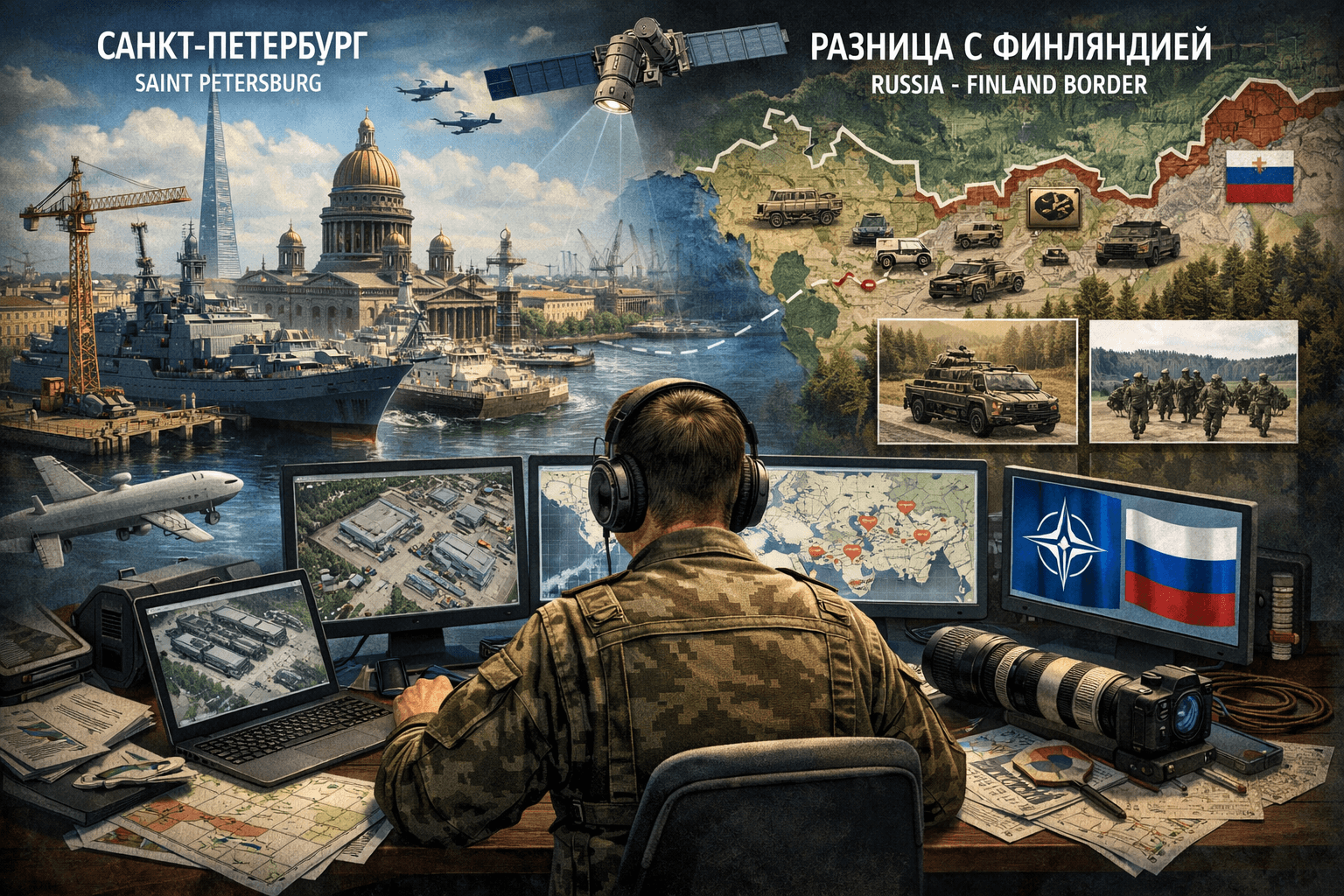
This project is an open-source intelligence (OSINT) investigation focused on recent and ongoing military developments in Saint Petersburg, Russia, and the surrounding Leningrad region. The objective is to identify infrastructure expansion, force restructuring, and strategic intent through verifiable open-source data amid heightened regional tensions following NATO’s northern expansion.
Research Objectives
• Identify military infrastructure growth in Saint Petersburg and nearby regions
• Analyze naval production and modernization at key shipbuilding facilities
• Assess troop deployments and unit restructuring near the Finland border
• Evaluate strategic implications for NATO, Arctic security, and regional stability
Methodology
The investigation relies exclusively on open-source intelligence techniques, including:
• High-resolution satellite imagery analysis
• Open-source media and government publications
• Defense and security think tank reports
• Geospatial comparison using historical and recent imagery
• Cross-referencing peer-reviewed military and strategic studies
All findings were verified through multiple independent sources to ensure analytical accuracy.
Naval Infrastructure Analysis (Admiralty Shipyards)
This section examines shipbuilding activity at Admiralty Shipyards in Saint Petersburg, highlighting the construction of advanced naval platforms such as ice-class patrol vessels and modern diesel-electric submarines. These developments indicate Russia’s strategic emphasis on Arctic operations, stealth capabilities, and cost-effective naval power projection for both domestic use and export markets.
Ground Force Expansion Near the Finland Border
The report analyzes the transformation of existing brigades into division-sized formations, particularly near Kamenka and Karelia. Satellite imagery and open-source reporting reveal expanded garrisons, new artillery facilities, and armored vehicle storage halls. These changes correspond with Finland’s NATO accession and suggest a deliberate shift toward sustained forward military presence.
Geospatial and Satellite Intelligence Findings
Satellite imagery from multiple timeframes confirms rapid construction of permanent military infrastructure, including training facilities, storage halls, and artillery bases. The pace and scale of development indicate long-term strategic planning rather than temporary force rotation.
Strategic Assessment
Findings suggest that Russia’s military buildup serves dual purposes: deterring NATO expansion along its northwestern border and strengthening readiness for potential Arctic and regional contingencies. The scale of investment challenges narratives of purely defensive posturing and reflects broader military restructuring within the re-established Leningrad Military District.
Events Timeline and Source Correlation
A chronological timeline aligns infrastructure growth and force expansion with official Russian decrees, defense ministry announcements, and media reporting. This correlation strengthens the assessment of coordinated, state-directed military planning.
Conclusion
The OSINT findings indicate a sustained and strategically significant military expansion in and around Saint Petersburg. Naval modernization, combined with ground force reinforcement near Finland, reflects Russia’s evolving security priorities in response to NATO dynamics and Arctic geopolitics.
Military Activity in Saint Petersburg, Russia
An open-source intelligence (OSINT) analysis examining recent military infrastructure development, naval production, and troop deployments in Saint Petersburg and along Russia’s border with Finland amid shifting NATO dynamics.
Year :
2025
Industry :
Television Industry
Client :
Anonymous
Project Duration :
3 Months
Project Overview
This project is an open-source intelligence (OSINT) investigation focused on recent and ongoing military developments in Saint Petersburg, Russia, and the surrounding Leningrad region. The objective is to identify infrastructure expansion, force restructuring, and strategic intent through verifiable open-source data amid heightened regional tensions following NATO’s northern expansion.
Research Objectives
• Identify military infrastructure growth in Saint Petersburg and nearby regions
• Analyze naval production and modernization at key shipbuilding facilities
• Assess troop deployments and unit restructuring near the Finland border
• Evaluate strategic implications for NATO, Arctic security, and regional stability
Methodology
The investigation relies exclusively on open-source intelligence techniques, including:
• High-resolution satellite imagery analysis
• Open-source media and government publications
• Defense and security think tank reports
• Geospatial comparison using historical and recent imagery
• Cross-referencing peer-reviewed military and strategic studies
All findings were verified through multiple independent sources to ensure analytical accuracy.
Naval Infrastructure Analysis (Admiralty Shipyards)
This section examines shipbuilding activity at Admiralty Shipyards in Saint Petersburg, highlighting the construction of advanced naval platforms such as ice-class patrol vessels and modern diesel-electric submarines. These developments indicate Russia’s strategic emphasis on Arctic operations, stealth capabilities, and cost-effective naval power projection for both domestic use and export markets.
Ground Force Expansion Near the Finland Border
The report analyzes the transformation of existing brigades into division-sized formations, particularly near Kamenka and Karelia. Satellite imagery and open-source reporting reveal expanded garrisons, new artillery facilities, and armored vehicle storage halls. These changes correspond with Finland’s NATO accession and suggest a deliberate shift toward sustained forward military presence.
Geospatial and Satellite Intelligence Findings
Satellite imagery from multiple timeframes confirms rapid construction of permanent military infrastructure, including training facilities, storage halls, and artillery bases. The pace and scale of development indicate long-term strategic planning rather than temporary force rotation.
Strategic Assessment
Findings suggest that Russia’s military buildup serves dual purposes: deterring NATO expansion along its northwestern border and strengthening readiness for potential Arctic and regional contingencies. The scale of investment challenges narratives of purely defensive posturing and reflects broader military restructuring within the re-established Leningrad Military District.
Events Timeline and Source Correlation
A chronological timeline aligns infrastructure growth and force expansion with official Russian decrees, defense ministry announcements, and media reporting. This correlation strengthens the assessment of coordinated, state-directed military planning.
Conclusion
The OSINT findings indicate a sustained and strategically significant military expansion in and around Saint Petersburg. Naval modernization, combined with ground force reinforcement near Finland, reflects Russia’s evolving security priorities in response to NATO dynamics and Arctic geopolitics.
Military Activity in Saint Petersburg, Russia
An open-source intelligence (OSINT) analysis examining recent military infrastructure development, naval production, and troop deployments in Saint Petersburg and along Russia’s border with Finland amid shifting NATO dynamics.
Year :
2025
Industry :
Television Industry
Client :
Anonymous
Project Duration :
3 Months
Project Overview
This project is an open-source intelligence (OSINT) investigation focused on recent and ongoing military developments in Saint Petersburg, Russia, and the surrounding Leningrad region. The objective is to identify infrastructure expansion, force restructuring, and strategic intent through verifiable open-source data amid heightened regional tensions following NATO’s northern expansion.
Research Objectives
• Identify military infrastructure growth in Saint Petersburg and nearby regions
• Analyze naval production and modernization at key shipbuilding facilities
• Assess troop deployments and unit restructuring near the Finland border
• Evaluate strategic implications for NATO, Arctic security, and regional stability
Methodology
The investigation relies exclusively on open-source intelligence techniques, including:
• High-resolution satellite imagery analysis
• Open-source media and government publications
• Defense and security think tank reports
• Geospatial comparison using historical and recent imagery
• Cross-referencing peer-reviewed military and strategic studies
All findings were verified through multiple independent sources to ensure analytical accuracy.
Naval Infrastructure Analysis (Admiralty Shipyards)
This section examines shipbuilding activity at Admiralty Shipyards in Saint Petersburg, highlighting the construction of advanced naval platforms such as ice-class patrol vessels and modern diesel-electric submarines. These developments indicate Russia’s strategic emphasis on Arctic operations, stealth capabilities, and cost-effective naval power projection for both domestic use and export markets.
Ground Force Expansion Near the Finland Border
The report analyzes the transformation of existing brigades into division-sized formations, particularly near Kamenka and Karelia. Satellite imagery and open-source reporting reveal expanded garrisons, new artillery facilities, and armored vehicle storage halls. These changes correspond with Finland’s NATO accession and suggest a deliberate shift toward sustained forward military presence.
Geospatial and Satellite Intelligence Findings
Satellite imagery from multiple timeframes confirms rapid construction of permanent military infrastructure, including training facilities, storage halls, and artillery bases. The pace and scale of development indicate long-term strategic planning rather than temporary force rotation.
Strategic Assessment
Findings suggest that Russia’s military buildup serves dual purposes: deterring NATO expansion along its northwestern border and strengthening readiness for potential Arctic and regional contingencies. The scale of investment challenges narratives of purely defensive posturing and reflects broader military restructuring within the re-established Leningrad Military District.
Events Timeline and Source Correlation
A chronological timeline aligns infrastructure growth and force expansion with official Russian decrees, defense ministry announcements, and media reporting. This correlation strengthens the assessment of coordinated, state-directed military planning.
Conclusion
The OSINT findings indicate a sustained and strategically significant military expansion in and around Saint Petersburg. Naval modernization, combined with ground force reinforcement near Finland, reflects Russia’s evolving security priorities in response to NATO dynamics and Arctic geopolitics.